11/19/2015

As I Lay Dying by William Faulkner

At the heart of this 1930 novel is the Bundren family's bizarre journey to Jefferson to bury Addie, their wife and mother. Faulkner lets each family member, including Addie, and others along the way tell their private responses to Addie's life.

~~~~~~~~~~~~~~~~~~~~~~~~~~~~~~~

I know as a self-professed “book nerd” I am supposed to love this book. I mean, it’s written by William Faulkner, one of the greatest American writers. Of course I should love it, right? Right? Unfortunately, I cannot say that I do. I didn’t hate the novel, but I didn’t love it either. I found the basic plot horrifying. This family spends the entire book trying to bury the recently deceased Addie, which takes days upon days to accomplish. The corpse is almost lost in a river, almost burned in a barn fire, and is delayed so much that the sink is undeniable by anyone who passes near it. While I get that Addie’s family was trying to fulfill her dying wish, at some point enough is enough.

I did like how Faulkner continually changed perspective throughout the novel. Each of his characters is unique and had their own parallel story, each I assume represents a way of living or dying. The language takes some getting used to, as he employes a heavy Southern dialect. This book is very “Southern,” not just because of it’s setting, but also because of its religious connotations and ideas of “proper” behavior. This naturally leads to rampant hypocrisy, all done covertly, of course. Nevertheless, the story is at times confusing. Some events lack context, at times the thoughts of characters are jumbled or refer to things that happened but not explained, and I was often left with the feeling that I missed something. I don’t mind having to think about a narrative while I read it. I guess I just prefer to think about it because it is thought provoking, not because I’m trying to put a puzzle together that is clearly missing a few pieces.

While I feel that Faulkner’s writing has merit, it’s just not my cup of tea. Like I said, in the end I am indifferent to this book. I didn’t hate it, but I didn’t like it either. I think this novel falls quite nicely into the “to each their own” category. Some people will love it, others will not. You will need to decide for yourself which side you fall on.
11/13/2015

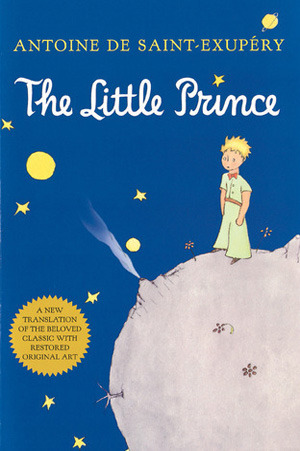
The Little Prince by Antoine de Saint-Exupéry

Moral allegory and spiritual autobiography, The Little Prince is the most translated book in the French language. With a timeless charm it tells the story of a little boy who leaves the safety of his own tiny planet to travel the universe, learning the vagaries of adult behavior through a series of extraordinary encounters. His personal odyssey culminates in a voyage to Earth and further adventures.

~~~~~~~~~~~~~~~~~~~~~~~~~~~~~~~

I honestly don't know what to make of this one. It is a very interesting story, which can be read very differently depending entirely on how old you are when you read it. Seen through the eyes of a child, the story is full of wonder and adventure. It is warning to young adults to hold on to that "child-like wonder" and creativity. There is also an element of sadness as the adults in the book seem to have lost any sense of curiosity, focused only on their mundane "adult" tasks.

When the story is considered in light of Saint-Exupéry's life, it certainly appears autobiographical. A young boy flies off to have an adventure, only to lose his innocence along the way. He knows that he can never return to the life he has...perhaps he even dies? Not far from the author who dreamed of being a pilot and adventure, only to experience an end to innocence at the hands of war.

I feel like this is a book that I will have to read several more times before I can formulate a more concrete opinion.

2015 Reading Challenge: A book that was originally written in a different language

11/12/2015

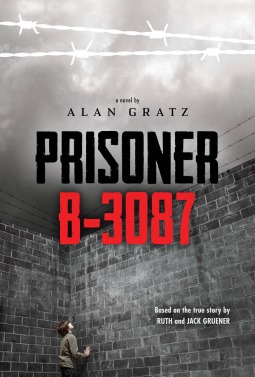
Prisoner B-3087 by Alan Gratz

Survive. At any cost.

10 concentration camps.

10 different places where you are starved, tortured, and worked mercilessly.

It's something no one could imagine surviving.

But it is what Yanek Gruener has to face.

As a Jewish boy in 1930s Poland, Yanek is at the mercy of the Nazis who have taken over. Everything he has, and everyone he loves, have been snatched brutally from him. And then Yanek himself is taken prisoner -- his arm tattooed with the words PRISONER B-3087.

He is forced from one nightmarish concentration camp to another, as World War II rages all around him. He encounters evil he could have never imagined, but also sees surprising glimpses of hope amid the horror. He just barely escapes death, only to confront it again seconds later.

Can Yanek make it through the terror without losing his hope, his will -- and, most of all, his sense of who he really is inside?

Based on an astonishing true story.

~~~~~~~~~~~~~~~~~~~~~~~~~~~~~~

Each chapter in this narrative represents a different concentration camp that the main character, Yanek, is sent to. In terms of providing a broad view of the various different horrors the Jewish people were subjected to at the hands of the Nazis, this book certainly does a good job, but I found it to be very surface level. 

Yanek experienced and witnessed numerous horrors, lost friends and family, and struggled to hold onto hope. The book does not shy away from the gory details, but I didn't find it to be overly graphic. The biggest issue I had with the narrative is that the story felt very rushed. Because it was trying to cover so much ground, each camp was reduced to a short chapter, which didn't allow for some of the elaborating details I would have liked. I suppose the rushed feeling did add some suspense to the narrative, but I felt it was more of a hindrance to the story than a benefit.

Nonetheless, I did like the book enough to include it in future book circles to supplement our unit on identify when we read books like Anne Frank: The Diary of a Young Girl and Hana's Suitcase.  

11/11/2015

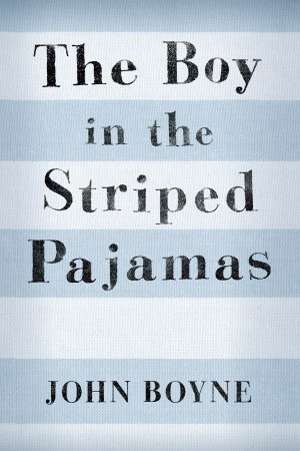
The Boy in the Striped Pajamas by John Boyne

Berlin, 1942: When Bruno returns home from school one day, he discovers that his belongings are being packed in crates. His father has received a promotion and the family must move to a new house far, far away, where there is no one to play with and nothing to do. A tall fence stretches as far as the eye can see and cuts him off from the strange people in the distance.

But Bruno longs to be an explorer and decides that there must be more to this desolate new place than meets the eye. While exploring his new environment, he meets another boy whose life and circumstances are very different from his own, and their meeting results in a friendship that has devastating consequences.

~~~~~~~~~~~~~~~~~~~~~~~~~~~~~~~~~

This was a very surprising and powerful novel. It is a unique novel because it is about the Holocaust and told from the perspective of a German boy, whose father is a top ranking Nazi official. The character of Bruno as been criticized for being "too innocent," but I disagree. First, he's a young boy who loves his father. Of course, he is innocent and naive. He lived a sheltered life, and because of this when he encounters unpleasant things or things he doesn't understand, it is natural that he dismissed them.

However, it is also this same innocence that allows him to recognize that there is something not quite right about what his father does, as well as befriend a Jewish boy trapped in a concentration camp. His innocence allows him to see beyond the differences to the similarities they both share and want to help his friend.

The ending was the most surprising and powerful part of the story. I don't want to give anything away, so I won't give anymore details. I do feel that this is a great book to give to young readers to start the conversation about the Holocaust. The story generates many questions and Bruno is relatable enough to appeal to young readers. I was blown away by this novel and it left a lasting impression on me. It is an impressive and touching piece of literature.

11/06/2015

The Almost Moon by Alice Sebold

For years Helen Knightly has given her life to others: to her haunted mother, to her enigmatic father, to her husband and grown children. When she finally crosses a terrible boundary, her life comes rushing in at her in a way she never could have imagined.

Unfolding over the next twenty-four hours, this searing, fast-paced audiobook explores the complex ties between mothers and daughters, wives and lovers, the meaning of devotion, and the line between love and hate. It is a challenging, moving, gripping story, written with the fluidity and strength of voice that only Alice Sebold has.


~~~~~~~~~~~~~~~~~~~~~~~~~~~~~~

Let me start by saying that I am a fan of Alice Sebold. I loved The Lovely Bones, but there is not much good I can say about this book. The main character, Helen Knightly, is one of the least sympathetic characters I have ever met between the pages of a book. I wanted to feel bad for her. She had great potential for sympathy. Her childhood, her father's death, her mother's slow decay, should have all inspired feelings of compassion, but her actions and the motivations behind them had the complete opposite effect. The plot was insipid and the ending was abrupt and incomplete. I didn't like this one at all.

11/03/2015

Hana's Suitcase by Karen Levine

In 2000, a suitcase arrived at a children's Holocaust education center in Tokyo, Japan, marked "Hana Brady, May 16, 1931." The center's curator searches for clues to young Hana and her family, whose happy life in a small Czech town was turned upside down by the invasion of the Nazis.

~~~~~~~~~~~~~~~~~~~~~~~~~~~~~~

My fellow English teachers and I decided to read this book as a companion novel to Anne Frank: The Diary of a Young Girl as part of our narrative nonfiction/identity unit. Our students responded well to this book, especially since it has a detective novel element to it. The book has two parallel timelines - Hana's story and Fumiko's (curator of the museum in Japan) quest to find out who Hana is and what happened to her. 

It is a quick read and has lots of photographs, which helps bring the story to life. I liked the back and forth between the different timelines. It added a level of suspense which drove the story forward and kept it interesting. Hana's story also provides another perspective to help students better understand the Holocaust, and generated some really great discussions with my students who made connections to current events. While I love Anne Frank's diary, I believe that Hana's Suitcase is an excellent addition to any school/classroom library.

10/30/2015

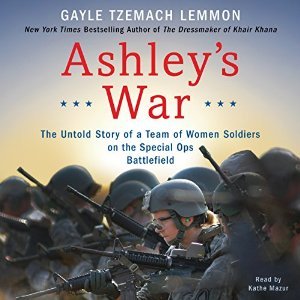
Ashley's War: The Untold Story of a Team of Women Soldiers on the Special Ops Battlefield by Gayle Tzemach Lemmon

From the author of the New York Times best seller The Dressmaker of Khair Khana comes the poignant and gripping story of a groundbreaking team of female American warriors who served alongside Special Operations soldiers on the battlefield in Afghanistan - including Ashley White, a beloved soldier who died serving her country's cause.

In 2010 the US Army Special Operations Command created Cultural Support Teams, a pilot program to put women on the battlefield alongside Green Berets and Army Rangers on sensitive missions in Afghanistan. The idea was that women could access places and people that had remained out of reach and could build relationships - woman to woman - in ways that male soldiers in a conservative, traditional country could not. Though officially banned from combat, female soldiers could be "attached" to different teams, and for the first time women throughout the army heard the call to try out for this Special Ops program.

In Ashley's War, Gayle Tzemach Lemmon uses exhaustive firsthand reporting and a finely tuned understanding of the complexities of war to tell the story of CST-2, a unit of women hand-picked from across the army, and the remarkable hero at its heart: 1st Lt. Ashley White, who would become the first Cultural Support Team member killed in action and the first CST remembered on the Army Special Operations Memorial Wall of Honor alongside the Army Rangers with whom she served.

Transporting readers into this little-known world of fierce women bound together by valor, danger, and the desire to serve, Ashley's War is a riveting combat narrative and a testament to the unbreakable bonds born of war.

~~~~~~~~~~~~~~~~~~~~~~~~~~~~~~

I thoroughly enjoyed listening to this story, and found this book to be fascinating, as I had never heard of the CST program prior to listening to this book. While Ashley White's story was the centerpiece of the book, I liked how the author weaved together several of the women's stories to provide a much more holistic view of the CST program and its participants. These women are inspirational. They came from all across the United States, all with a single-minded goal: to serve their country in the most meaningful way possible. 

Prior to this program, positions on the front lines had been largely closed to women, despite the fact that women have proven both their ability and willingness to serve in the most dangerous environs of war. These women, carefully selected, were in essence pioneers, tasked with proving themselves in a male dominated field resistant to change. They not only had to prove themselves in the moment, but set a prescient that would impact the lives and careers of generations of female soldiers to come. They pushed themselves physically, mentally, and emotionally to serve at the highest standard they could achieve.

Yet, they were human. It could have been really easy to portray these women as "other," something beyond what anyone could hope to achieve, but I think the author did a good job humanizing them. She wrote about their flaws, challenges, hopes, and dreams. She made them unique and ordinary at the same time. This made their characters relatable and I found myself draw in by their stories because I could relate to them and their experiences as women on a personal level.

You don't have to be overly interested in military stuff to get hooked by this book, as the focus is less on that and more on telling the stories of these incredible women. In my opinion, this book is well worth a read (or listen!).